The Renters’ Rights Act, due to come into force on 1st May 2026, represents one of the most significant reforms to the private rented sector in decades.
While many landlords already operate responsibly and professionally, the new legislation introduces several important changes that will affect how rental properties are managed across the UK.
For landlords across Bridgwater, Taunton, Wellington, Burnham-on-Sea and Weston-super-Mare, understanding these changes early is the best way to ensure you remain compliant and confident moving forward.
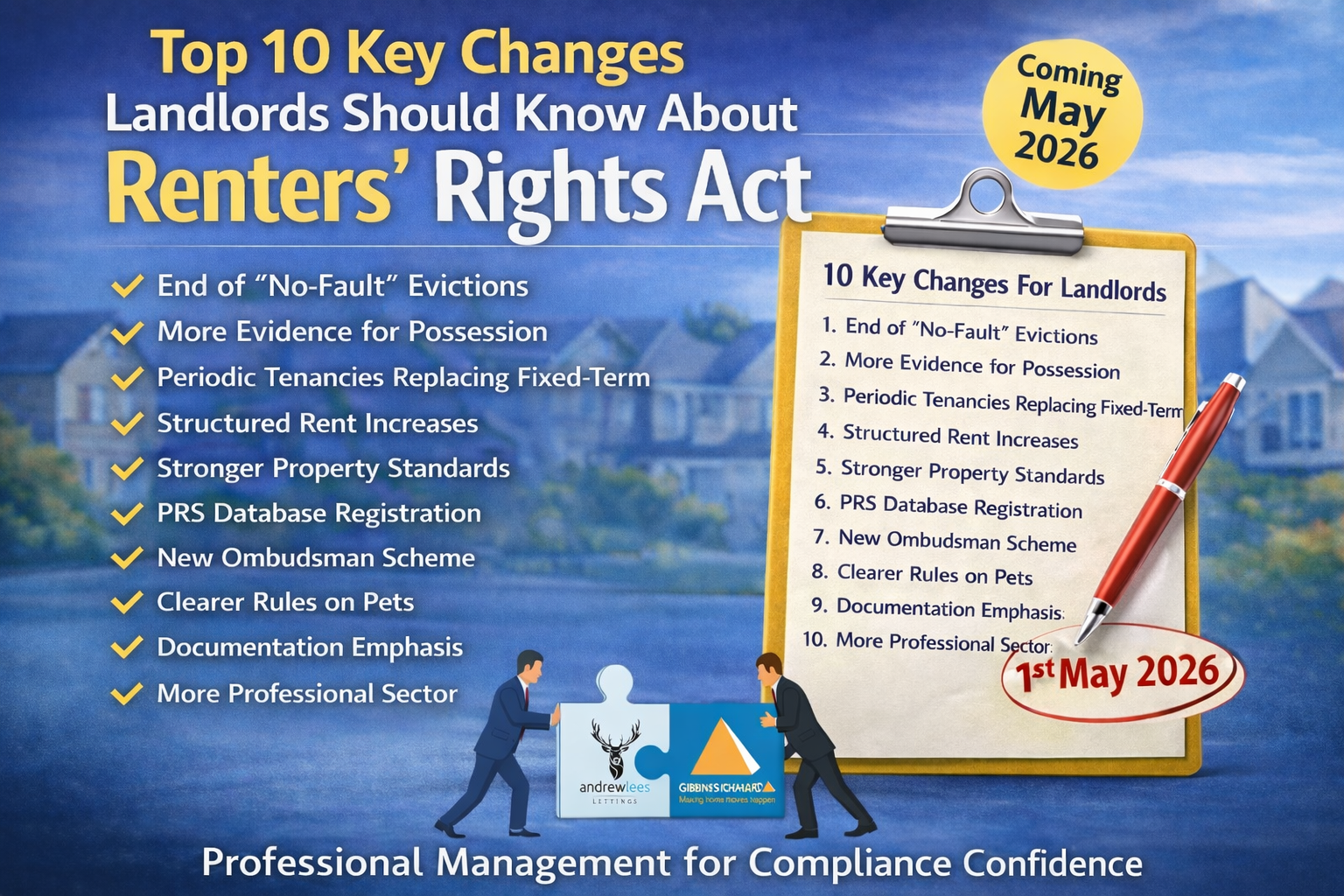
Below are the 10 key changes landlords should be aware of ahead of May 2026.
1. The End of Section 21 “No-Fault” Evictions
Perhaps the most widely discussed change is the removal of Section 21 notices.
This means landlords will no longer be able to regain possession of their property without providing a specific legal reason.
Instead, landlords will need to rely on Section 8 grounds, which require evidence and documentation to support possession claims.
How we help:
Our management service ensures the correct notices are served and the appropriate documentation is maintained should possession ever be required.
2. Greater Reliance on Section 8 Possession Grounds
With Section 21 removed, possession will rely on an expanded set of Section 8 grounds, including:
- Rent arrears
- Landlords wishing to sell the property
- Landlords or family members moving into the property
- Tenant breaches of the tenancy agreement
These grounds must be supported by clear evidence.
How we help:
We maintain detailed records of communication, inspections and tenancy documentation to ensure landlords are protected if possession becomes necessary.
3. Fixed-Term Tenancies Will Be Replaced
Under the new rules, fixed-term assured shorthold tenancies will be replaced with periodic tenancies, meaning tenancies will continue unless either party ends them using the correct legal grounds.
This is designed to give tenants greater long-term stability.
How we help:
We ensure tenancy agreements and processes are updated to reflect new legislation so landlords remain fully compliant.
4. Rent Increases Will Be More Structured
Rent increases will still be possible, but they will follow a more formalised process and typically be limited to once per year.
Tenants will also have the ability to challenge increases if they believe they are unfair.
How we help:
We carry out regular market-led rent reviews supported by local evidence to ensure increases remain fair, realistic and defensible.
5. Stronger Tenant Rights Around Property Standards
The Renters’ Rights Act reinforces expectations around property condition, repairs and maintenance, particularly relating to hazards such as damp and mould.
Landlords will be expected to respond promptly to maintenance issues.
How we help:
Our systems log repair requests, contractor instructions and completion times, ensuring a clear record of action and response.
6. A New Private Rented Sector Database
A national Private Rented Sector (PRS) database will require landlords to register their rental properties.
This aims to improve transparency and help local authorities monitor compliance.
How we help:
We monitor regulatory changes and ensure landlord records remain accurate and compliant as registration systems are introduced.
7. A New Ombudsman Scheme
Landlords will be required to join a private rented sector ombudsman scheme, giving tenants an independent route to resolve disputes.
This aims to reduce the need for court action.
How we help:
As professional agents, we already work within structured complaint and resolution procedures, helping resolve issues before they escalate.
8. Clearer Rules Around Tenant Pets
Tenants will gain stronger rights to request permission to keep pets.
Landlords can still refuse requests in certain circumstances, but refusals must be reasonable.
How we help:
We manage tenant requests and ensure any decisions are properly documented and compliant with the new framework.
9. Greater Emphasis on Documentation
Across all aspects of the Renters’ Rights Act, one theme stands out:
documentation will become increasingly important.
Landlords will need clear records of:
- Inspections
- Maintenance responses
- Communication with tenants
- Correctly served notices
How we help:
Our systems record and store documentation securely, ensuring landlords have the evidence required should any disputes arise.
10. A More Professional Rental Sector
Ultimately, the Renters’ Rights Act is designed to create a more transparent and professional private rented sector.
For landlords who already maintain their properties well and manage their tenants fairly, these changes should be manageable.
However, the administrative and compliance workload will increase.
How we help:
Our fully managed service allows landlords to remain confident that their property is being managed professionally, compliantly and in line with the latest legislation.
Preparing for May 2026
The most important thing landlords can do now is prepare early rather than react later.
Over the past six months we have seen several landlords across Somerset choose to move to fully managed services in order to ensure everything is handled correctly ahead of the new rules.
Planning now can help avoid unnecessary stress once the legislation is fully in force.
📘 Learn More About Our Landlord Services
For full details on our management packages and landlord support:
Andrew Lees Lettings – Landlord Brochure
👉 Click Here
Gibbins Richards Lettings – Landlord Brochure
👉 Click Here
Disclaimer
This blog has been researched and created by Andrew Lees Lettings & Gibbins Richards Lettings and is accurate at the time of publication. It is intended for general informational purposes only and should not be relied upon as legal or financial advice.